What camera gear to pack: build the list from your shots
Every packing list online tells you what someone else carries. The only list that fits your trip or your shoot comes from your own shots: what each one needs, counted, and cut.
There are two ways to pack for a shoot. The first is to stand in front of everything you own and ask "what if I need this?" — and the answer is always yes, so it all goes in the bag. You carry eleven kilos up a hill and use a body and one lens.
The second is to ask a different question: which of my planned shots needs this? If the answer is "none", it stays home.
I travel with a Sony a7 II and a Tamron 20–40mm, an action camera, a 360 camera and my phone. That's already five things that film, and on a trip with no plan I'll carry all five every day and use two. The gear isn't the problem. Not knowing what each piece is for is.
Gear belongs to shots, not to bags
A packing list written on its own is a list of fears. A packing list derived from a shot list is a list of facts.
So the gear decision moves earlier — into the shot itself. When you plan a shot, you write what it's filmed on:
| Shot | Type | Camera | Lens / mount |
|---|---|---|---|
| Old town from the bridge | Wide, static | Main camera | 20–40mm, tripod |
| Walking through the market | Follow, handheld | Main camera | 20–40mm |
| Tram passing, low angle | Detail | Action camera | Mini tripod |
| The square from the centre | 360, reframed later | 360 camera | Monopod |
| Coffee, hands | Detail | Main camera | 20–40mm |
It takes ten seconds a shot, and you were going to decide it anyway — just later, on location, with the light going.
Then count
Turn the shot list sideways. For each piece of gear, how many shots use it?
| Gear | Shots that need it | Verdict |
|---|---|---|
| Main camera + 20–40mm | 31 | Goes |
| Tripod | 9 | Goes |
| Action camera | 6 | Goes |
| 360 camera + monopod | 2 | Hmm |
| Telephoto | 0 | Stays home |
| Gimbal | 1 | Hmm |
Three verdicts fall out immediately:
- Zero shots: it stays. No discussion. This is the row that takes two kilos off your back.
- Many shots: it goes, and you think about a spare battery for it, because a lot depends on it.
- One or two shots: decide on purpose. Either the shot is worth carrying the thing for — sometimes it is; one 360 shot at the peak of the video can be the shot — or you redesign the shot for gear you're already carrying. A gimbal move for one shot often becomes a careful handheld walk.
Pack by day, not by trip
If the shoot is more than a day, do the count per day. The 360 camera has two shots and both are on day three: it lives in the hotel until then. The tripod's nine shots are all dawn and dusk: it comes out for those and stays behind at midday.
Light decides this as much as location does, which is why it pays to plan each shot around its light window first and pack second.
What the count doesn't cover
The list from your shots is the creative kit. Add the boring layer that every shoot needs regardless: batteries and a way to charge them, cards and a way to back them up, a cloth, rain cover, the right plates and cables. Those don't depend on any shot, so write them once and reuse the same block every time.
The same thing in PreFrame
In PreFrame, gear is part of every shot. The shot editor has a camera and a lens — brand and model — next to the shot's type, duration and notes.
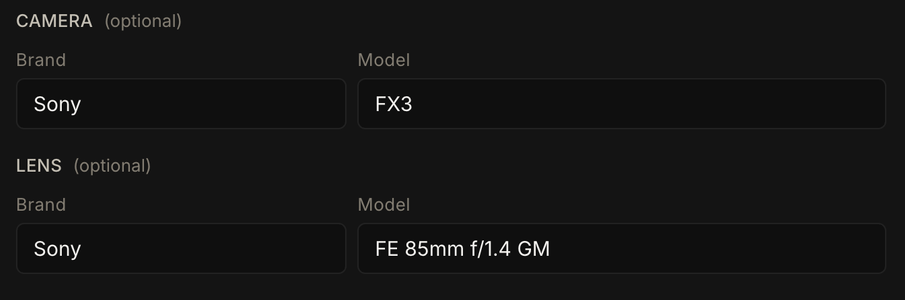
You don't retype your kit each time. Your cameras and lenses live in a personal inventory that travels with you across projects, so assigning gear is picking from what you own. And a shot pulled from your shot library arrives with the gear it worked on already attached.
Once it's on the shot, the gear shows wherever the shot does: on its card in the section, and on every shot of the printed shooting plan.
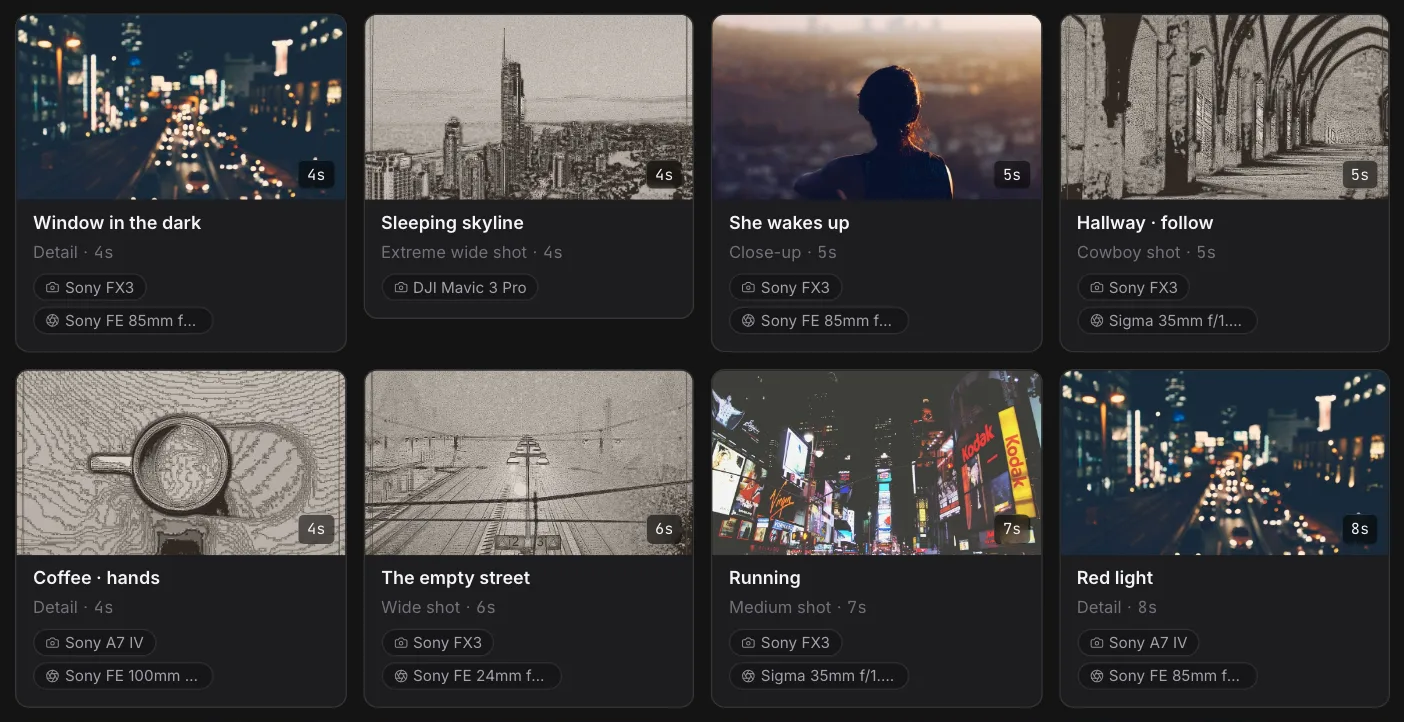
The count is still yours to do — read down the plan and tally — but it's a two-minute job, because every shot already says what it needs. If a piece of gear never appears in the plan, you have your answer before you've opened the bag.
Carry what the video needs. Leave what your nerves want.